TL;DR
A standard domestic CCTV drain survey in Bath typically takes around one to two hours on site, depending on how long the pipe run is and how many access points the engineer needs to open. On the day, expect the camera to be fed through the drain while you watch live footage, followed by a written report afterwards. Request a quote online to arrange one for your property.
How long a survey actually takes
There's no single fixed time, because it depends entirely on the drainage layout being surveyed. A short, straightforward run from one inspection chamber to the boundary can be done well inside an hour. A longer or more complex system — several manholes, awkward bends, or limited access — can take closer to two hours or a little more. The engineer will usually get a feel for the scale of the job once they see the property and the number of chambers involved, so the time on site is genuinely tailored to what's actually there rather than a one-size-fits-all appointment slot.
What happens on the day, step by step
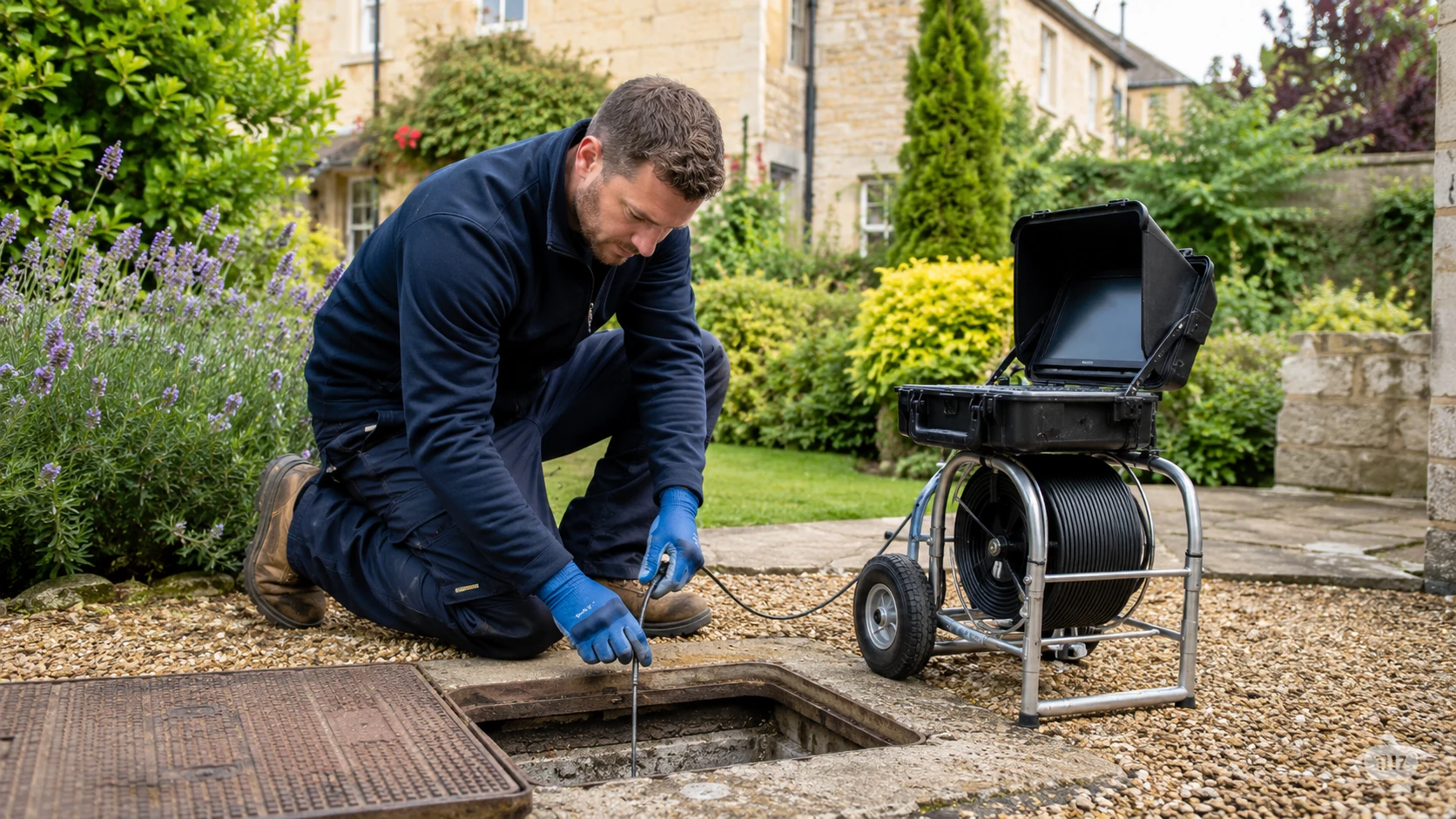
- **Access.** The engineer locates the relevant manholes or inspection chambers and lifts the covers. In some of Bath's older streets and narrower lanes, this takes a bit more care to avoid disrupting parked cars or pedestrians.
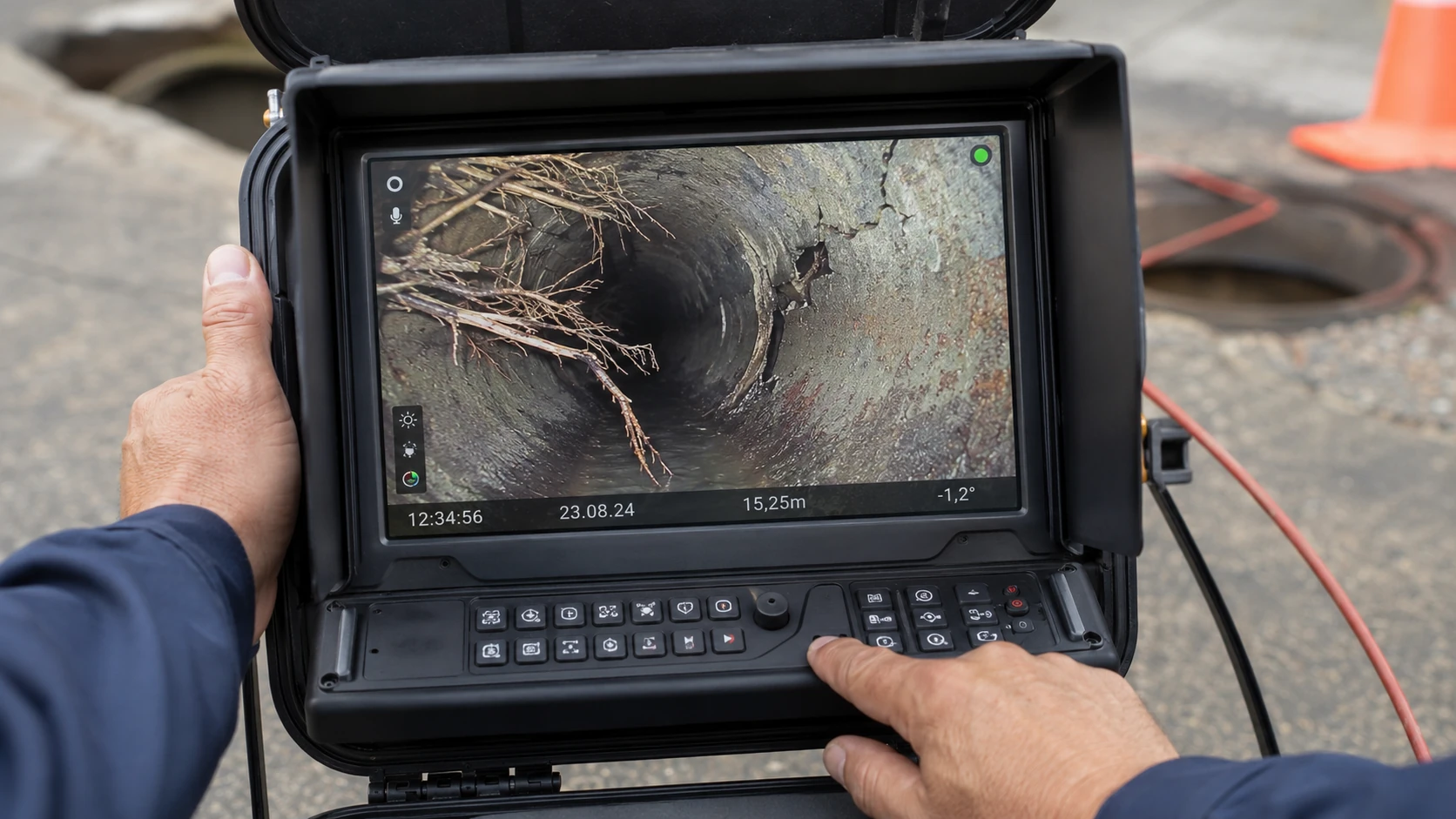
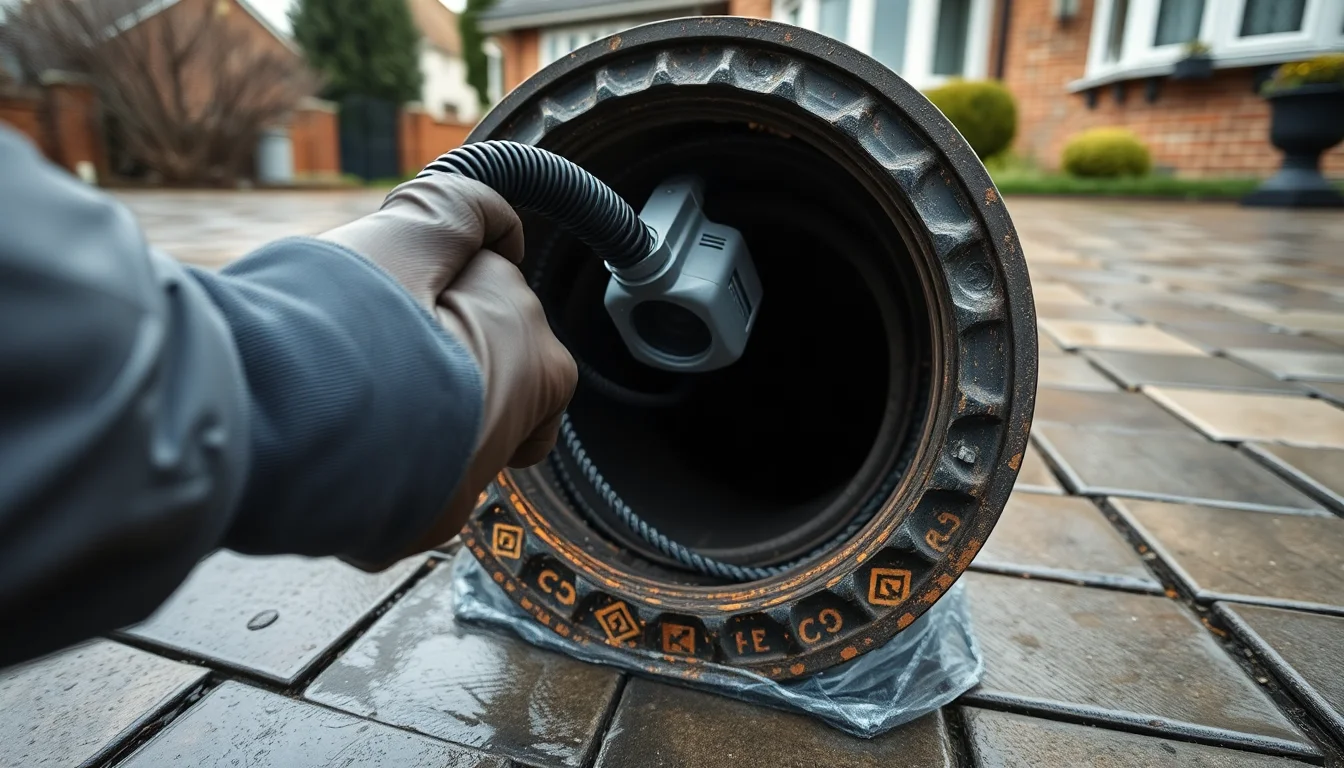
- **Running the camera.** A waterproof camera on a flexible rod is fed through the pipe, navigating bends and junctions, with the engineer guiding it and watching a live feed as it goes.
- **Live footage.** You can watch the same feed the engineer is seeing, and they'll point out anything of note as it appears — a crack, a displaced joint, root ingress, or a build-up of debris — rather than leaving you to interpret a report cold afterwards.
- **Recording and mapping.** The whole run is recorded, and the engineer notes the position of anything found relative to fixed points like manholes or the property boundary.
- **Wrap-up.** Once the run is complete, the equipment is packed away, covers are replaced, and the engineer talks you through what they found before leaving.
What you receive afterwards
The end result is a package built around three things: the recorded footage itself, so you can review the interior of the pipe at your own pace; a written report with each defect graded to the WRc MSCC5 standard — the industry classification that separates a minor cosmetic mark from something structurally serious; and a schematic drain map showing where the pipework runs and where any defects sit. Together, these give a solicitor, surveyor or insurer something concrete to work from, rather than a verbal description of what was seen on the day.
Why this matters more for Bath's older properties
A lot of Bath's housing dates from the Georgian and Victorian eras, much of it draining through original clay or cast-iron pipework that's well over a century old. Roots from mature street trees, ground movement over the decades, and simple age all take their toll on pipes like these in ways that don't show up anywhere above ground. That's exactly why a pre-purchase CCTV drain survey has become a standard part of due diligence for period properties — our guide on CCTV drain surveys for home buyers explains why a standard building survey doesn't cover this at all. Seeing the condition of the pipework before you commit to a purchase, or before a problem forces the issue, is the whole point of the exercise.
Getting the most out of the visit
There are a couple of things that make the day go more smoothly. Clearing access to manhole covers beforehand — moving a bin, a car, or garden furniture off an inspection chamber — saves time that would otherwise go on shifting obstacles rather than surveying the drain. It also helps to mention beforehand if you already know roughly where the drains run, or if a previous problem (a slow sink, a smell in a particular corner of the garden) pointed you towards booking the survey in the first place, since that can help the engineer focus attention where it's most useful.
If the survey is being done as part of a house purchase, it's worth booking it after your offer has been accepted but before contracts are exchanged, so there's still time to act on whatever the report finds — whether that's negotiating on price, asking the seller to carry out repairs, or simply going into the purchase with your eyes open.
Frequently Asked Questions
**How long does a CCTV drain survey take?**
A typical domestic survey takes around one to two hours on site, though a longer or more complex drainage run with several access points can take a bit more. The engineer tailors the time to the actual layout of your property rather than working to a fixed slot.
**What happens during a CCTV drain survey?**
An engineer opens the relevant manholes or inspection chambers, feeds a waterproof camera through the pipe, and you can watch the live footage as it happens. Afterwards you receive the recorded footage, a written report with defects graded to the WRc MSCC5 standard, and a schematic map of the drainage run.
**Do I need a CCTV drain survey when buying a house?**
It's worth strongly considering, particularly for older properties, because a standard building survey does not inspect underground drainage at all. A CCTV survey is the only way to see the actual condition of the pipes before you commit to a purchase.
**Is a CCTV drain survey disruptive?**
No. It's a non-invasive process that works through existing manholes and inspection chambers without any digging, so it can usually be arranged at a time that suits you without disturbing the property.